
Just a few miles from The Redwoods In Yosemite, the majestic and awe-inspiring Mariposa Grove of Giant Sequoias is a must-see for your Yosemite bucket list!
The Mariposa Grove is the largest sequoia grove in Yosemite and is home to more than 500 mature giant sequoias. These ancient trees are the most massive in the world and naturally occur in only a handful of groves in the Sierra Nevada. Walking through a sequoia forest feels a bit like stepping back in time, as you find yourself among living giants that have stood here for thousands of years.
Here’s what you need to know for a fun and awe-inspiring visit to the Mariposa Grove.
Getting to the Mariposa Grove of Giant Sequoias
It takes only about 15 minutes to drive from The Redwoods In Yosemite cabins to the main parking area for the Mariposa Grove near the South Entrance of Yosemite National Park.
Welcome Plaza Parking
The Welcome Plaza parking area accommodates about 300 vehicles and can fill during the busiest times of year. Like many popular park destinations, it’s best to arrive early in the morning or later in the afternoon and evening, after the largest crowds have come and gone.
At the Welcome Plaza, you’ll find modern restrooms, a small gift shop (no food items), and interpretive displays that share the story of the grove. There is often a volunteer information station where you can ask questions and get helpful tips for your visit. This is also a great place to fill your water bottle before your hike and catch the free shuttle bus when it’s running.
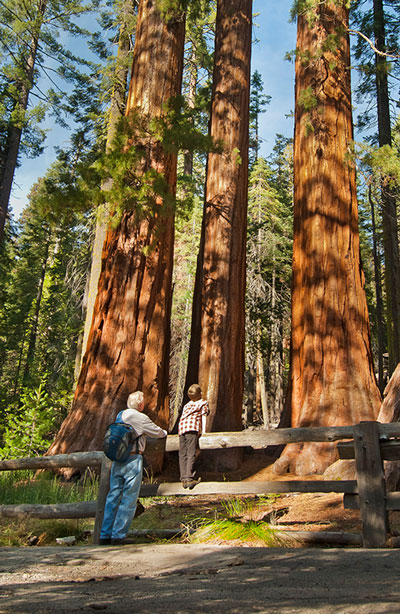
Just a short distance from Wawona, the Mariposa Grove of Giant Sequoias is Yosemite’s largest and most impressive grove of sequoia trees.
Free Shuttle Services
During the summer, you can board a convenient free shuttle that will whisk you to the lower grove’s Arrival Area. Buses typically leave every 15 minutes. Along the way, keep your eyes open—you’ll pass several massive giant sequoias before you even begin your hike.
Be sure to note when the last shuttles leave for the day unless you’re planning to walk back to the parking area. The National Park Service website lists current shuttle schedules, and you can also confirm the timing with your shuttle driver.
Hiking from the Welcome Plaza
You can also wander through beautiful conifer forests for about 2 miles (one way) along the Washburn Trail to the Arrival Area. The Washburn Trailhead is located at the far end of the parking area and is the only access option during the winter season once the shuttle buses stop running.
Hiking from Wawona
For those looking for a longer adventure, a 5-mile (8 km, one way) trail leaves from behind the Wawona Hotel and winds through scenic pine forests before joining the Perimeter Trail on the western edge of the Mariposa Grove between the upper and lower groves.
Biking to the Grizzly Giant
You can ride your bicycle on the Mariposa Grove Road from the Welcome Plaza to the Grizzly Giant when the road is open for the season. This is a great option during times when the road is open, but the shuttle buses are not running.
Be prepared. The road climbs steadily uphill from the Welcome Plaza to the Grizzly Giant. The good news is that you’ll get to enjoy an easy coast back down at the end of your visit.
Bikes are not allowed anywhere else in the grove. So, if you plan to explore beyond the Mariposa Grove Road to the Grizzly Giant, bring bike locks with you so you can leave your bikes behind as you continue to hike and explore.
Please help preserve this biking opportunity by riding respectfully around shuttle buses and pedestrians, and by staying on the road.
If You Have a Disability Placard
When the Mariposa Grove Road is open, visitors with a disability placard may drive up to the Grizzly Giant area. There is a limited amount of accessible parking near the Grizzly Giant, allowing you to park and explore nearby sections of the grove. Speak with the ranger on duty to be allowed through the gate and up Mariposa Grove Road.
Arrival Area
The Arrival Area is aptly named. Once you arrive, you’re surrounded by the splendor of the Mariposa Grove.
If you hurried to catch the shuttle and didn’t stop at the Welcome Plaza, you’ll find restrooms at the shuttle bus stop before beginning your hike. These are flush toilets during the summer and pit toilets during the winter.
Seasonal Considerations – Winter Visits
If you are planning to visit the Mariposa Grove during winter or early spring, there are a few things to know.
-
- Plan to walk or ski from the parking area. Shuttle buses between the Welcome Plaza Parking and Arrival Area do not run during the winter. This will add 2 miles to your trip each way.
- Consider snowshoes or cross country skis when the road is snow-covered. Sometimes the snow will be firm enough to walk on without them, but as the snow warms in the afternoon, it gets softer and can make walking difficult. Snowshoes provide extra float and traction, and with skis, you get to glide back down to the car at the end of the day.
- When will the Mariposa Grove Road open? The road opens depending on conditions. NPS has been tracking historic road opening dates for the Mariposa Grove Road since 2010. This can help you get a better idea of when the road might open.
No Pets in the Mariposa Grove
Unfortunately, dogs are not allowed on any of the trails or roads in the Mariposa Grove. This includes Mariposa Grove Road (where the buses run), the Washburn Trail, the shuttle buses, and anywhere else in the grove.
If you’d like to walk among giant sequoias with your pup, consider visiting the Tuolumne Grove of Giant Sequoias instead. Dogs are allowed on the main paved trail through that grove, though they are not permitted on the side trails.
How long should I plan to spend at the Mariposa Grove?
Plan to spend somewhere between 2 hours and all day at the Mariposa Grove. If you catch a free shuttle bus and walk the shortest loop, this can be a relatively short visit. However, remember, those who take the time to pause and truly immerse themselves in the Mariposa Grove experience, like many of Yosemite’s captivating landscapes, will find their effort richly rewarded.
We have included some estimated average hiking times for each of the main trails below. When planning, remember to add more time for getting to the Arrival Area, as well as moments to stop and enjoy.
Hiking Trails in the Mariposa Grove
Once you’ve arrived at the Arrival Area, you’ll find a network of trails that let you explore the grove at your own pace. Note that the Mariposa Grove Arrival Area is at about 5600 feet (1700 m) in elevation and climbs from there. If you are arriving from near sea level, you may want to give yourself some extra time.
Big Trees Loop Trail (easy)
0.3 mile (0.5 km) loop from the trailhead, 30 to 45 minutes (wheelchair accessible)
Begin at the Mariposa Grove Arrival Area. Winding through a forest filled with giant sequoias, this short trail features the Fallen Monarch along with interpretive panels that explain the life and ecology of these remarkable trees. The loop is relatively flat and wheelchair accessible.
Grizzly Giant Loop Trail (moderate)
2 miles (3.2 km) loop from the trailhead, 1.5 to 2 hours
Begin at the Mariposa Grove Arrival Area. Start along the Big Trees Loop and continue past notable trees such as the Bachelor and Three Graces, the Grizzly Giant, and the California Tunnel Tree. The full loop winds along the edge of the grove and includes about 300 feet (91 m) of elevation gain. Visitors with a valid disabled placard can drive as far as the Grizzly Giant parking area and explore this section of the grove via a short wheelchair-accessible trail.
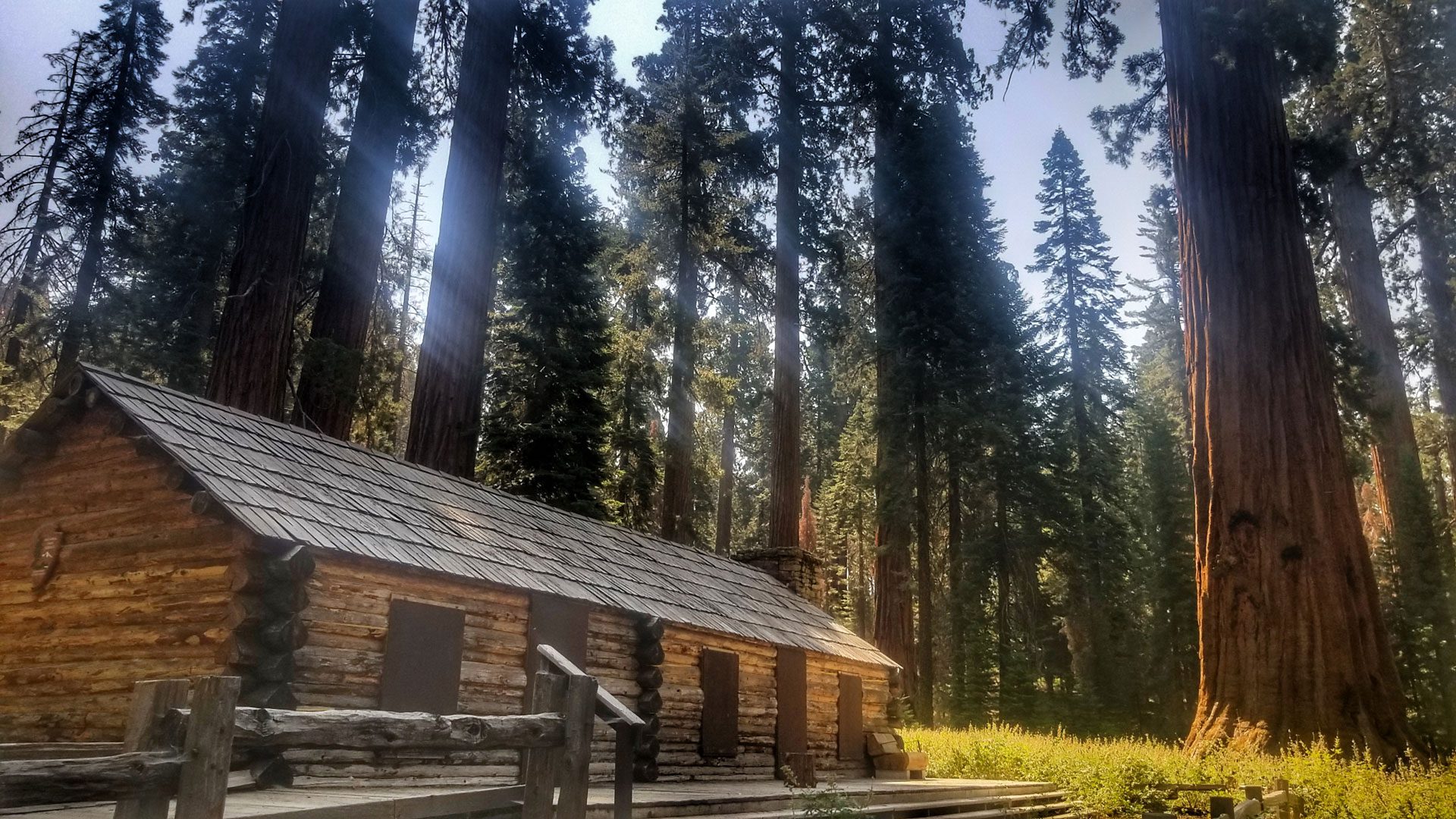
The Mariposa Grove Cabin is located in the Upper Grove surrounded by giant sequoia trees.
Guardians Loop Trail (strenuous)
6.5 miles (10.5 km) round trip from the trailhead, 4 to 6 hours
Begin at the Mariposa Grove Arrival Area. Take the Grizzly Giant Loop Trail to the Grizzly Giant, then continue along the Mariposa Grove Trail past notable trees such as the Faithful Couple, the Clothespin Tree, and the Mariposa Tree as you head toward the upper grove.
One highlight of this hike is the Mariposa Grove Cabin, nestled among towering sequoias and offering a wonderful sense of scale to the landscape. Along the way, you’ll also pass the Galen Clark Tree, Telescope Tree, the Fallen Tunnel Tree, and the Columbia Tree. For an extra treat, continue out to Wawona Point for a scenic view looking back toward Wawona (see a virtual tour), and perhaps even toward your cabin.
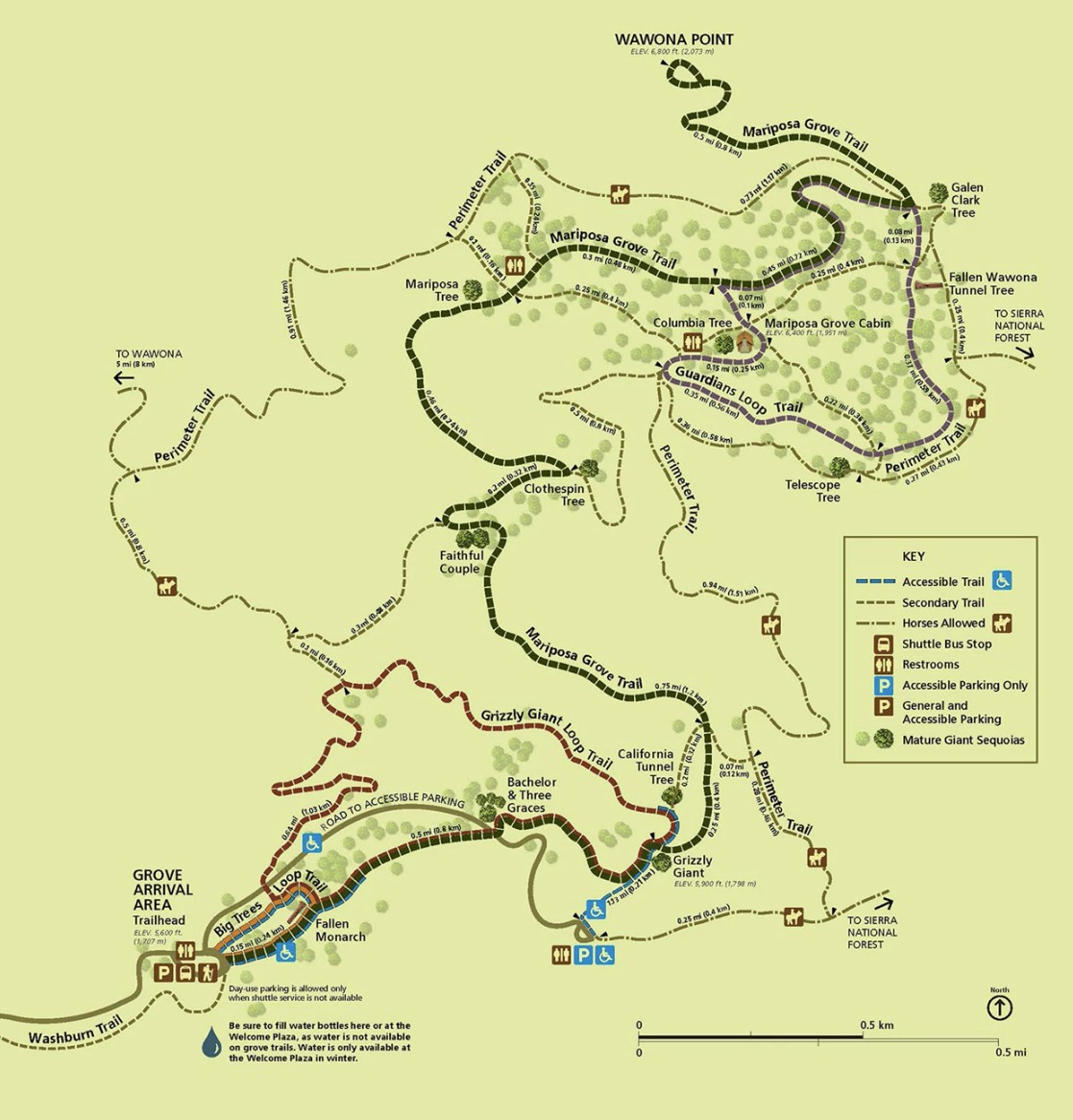
Map of the Mariposa Grove of Giant Sequoias courtesy NPS.
What to Bring to the Mariposa Grove
-
- Snacks/food. There are no food services at the Mariposa Grove.
- Water. You can fill water bottles at the Welcome Plaza (year-round) and Arrival Area (summer).
- Sturdy hiking shoes
-
- Layers of clothing – temperatures vary over the course of the day. Having a few extra layers that you can take off or put on ensures that you can stay comfortable.
- Sun protection – sunglasses, sunhat, and/or sunscreen are helpful at this elevation, especially for longer hikes.
- Trail Map. Find one at a visitor center, or at the very least, take a photo on your phone so you don’t miss a tree that you wanted to visit.
- Traction devices, snowshoes, or skis in the winter to help navigate the snow-covered terrain.
- Camera. In addition to the sequoias themselves, the Mariposa Grove is a complete ecosystem and home to birds, squirrels, and other wildlife as well as a variety of plants and trees.
Protecting the Mariposa Grove
Creating the National Parks
The Mariposa Grove and Yosemite Valley are such special places; they inspired the first legislation to protect scenic natural areas for “public use, resort, and recreation.”
This sparked the National Park system. On June 30, 1864, in the midst of the Civil War, President Abraham Lincoln signed the Yosemite Grant Act, protecting these remarkable places for the benefit of future generations. This landmark legislation later helped inspire the national park idea. Yosemite National Park was established in 1890 to protect Yosemite’s high country, and the Mariposa Grove and Yosemite Valley officially became part of the park in 1906.
Caring for the Mariposa Grove of Giant Sequoias Now
Even though mature giant sequoia trees have lived for thousands of years, they are also very fragile in some ways. Here are a few things that we can do to help ensure that these ancient trees are still here far into the future as well.
Stay on trails and off shallow root systems. The Fallen Monarch shows how these giant trees are entirely supported by a very shallow root system. Thousands of human feet can compact the soil around these shallow roots, making it harder for roots to grow and for the trees to get the water and nutrients they need. You can help care for the sequoias by respecting fences to give the trees space to thrive.
Fire management. Giant sequoias need fire to reproduce. The heat from fires releases sequoia seeds from their cones. Fire also clears competing trees and prepares the soil for new sequoias to grow. Typically, the spongy tannin-filled bark of a mature sequoia is thick enough to protect it from the fires needed for new sequoias to take root.
However, between 2015 and 2021, six high-intensity fires raged through sequoia groves, burning more than 85% of all sequoia grove acreage in the Sierra Nevada and killing eight-thousand or more mature sequoia trees. Fire managers now realize they need to create a balance between allowing some fire and managing the intensity so that it doesn’t kill the mature trees. They do this through prescribed burns and cutting small firs, pines, and cedars that have grown too thick to allow for a safe prescribed burn.
